You pour yourself a glass of whiskey, take a sip, and decide it’s pretty good. Then someone beside you starts talking about toasted marshmallows, dried cherries, leather, and freshly baked banana bread. Meanwhile, you’re looking down at your glass, wondering whether you’re drinking the same thing. If you’ve ever been in that situation, you know how quickly a casual conversation about whiskey can start to feel intimidating.
Learning how to taste whiskey gets much easier when you give yourself permission to start with simple observations. You don’t need an impressive vocabulary or a list of tasting notes memorized before you take a sip. At Barrel Hunters, we want people to feel comfortable exploring what’s in their glass and figuring out what they enjoy. Paying attention to a whiskey’s nose, palate, and finish gives you a useful place to begin.
Start With Your Glass and Surroundings
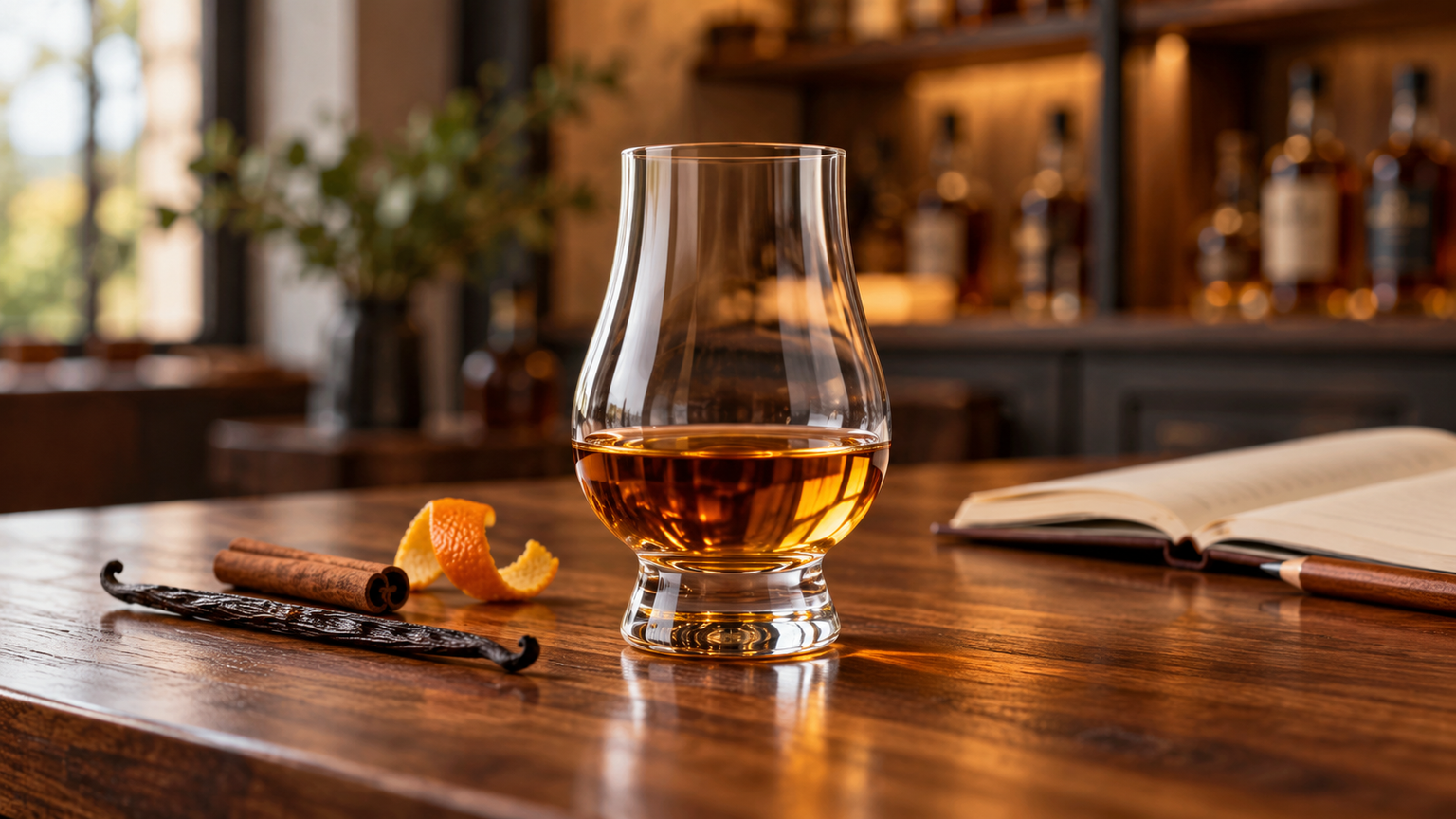
You don’t need a cabinet full of expensive glassware, but the shape of your glass can influence how you experience a whiskey’s aromas. A Glencairn or another tulip-shaped tasting glass is a useful choice because its narrower opening helps concentrate them. Pour roughly half an ounce to an ounce, and begin with the whiskey at room temperature, without ice. That gives you a starting point before you experiment with water or chilling it.
Your surroundings deserve a little attention, too. A heavily scented candle, strong cologne, or the lingering flavor of a spicy meal can make subtle aromas and flavors harder to pick out. Choose a setting where you can focus on the whiskey without too much competing for your senses.
Take a Look at What’s in Your Glass
Before bringing the glass to your nose, take a moment to notice the color. You might see pale gold, warm amber, copper, or something closer to dark mahogany. Appearance can offer clues about maturation and the influence of the cask, although a darker whiskey isn’t automatically older or better. Barrels, production choices, and the use of coloring where permitted can all affect what you see.
You may also notice streaks running down the inside of the glass after you swirl it. These are usually called legs, and you’ll sometimes hear people talk about them as though they reveal everything about a whiskey. They’re interesting to observe, but they aren’t a reliable measure of quality. You’ll learn much more by smelling and tasting what’s in the glass.
The Nose: Start With Familiar Aromas
The nose is simply the whiskey’s aroma, and exploring it is an important part of the tasting experience. Bring the glass toward your nose slowly and take a few gentle sniffs. Putting your nose deep into the glass and inhaling hard can overwhelm you with alcohol, especially with a higher-proof pour. Try adjusting the distance or keeping your mouth slightly open if that feels more comfortable.
Start with a broad impression rather than searching for an elaborate description. Does the whiskey smell sweet, fruity, spicy, woody, floral, or smoky? Once you’ve found a general direction, see whether a familiar scent comes to mind. Sweetness might remind you of vanilla, honey, or caramel; fruit could suggest apples, cherries, citrus, or raisins. A spicy aroma might bring to mind cinnamon, cloves, or black pepper.
Give yourself time to make those connections. The aromas you recognize are shaped partly by the foods, spices, and other scents you’ve encountered, so someone else’s description won’t always match yours. If they find cherry and you think strawberry, you don’t have to abandon your impression. Describe what the whiskey reminds you of, and let your vocabulary develop as you explore.
The Palate: Notice Flavor, Texture, and Change
Take a small sip and give yourself a moment to get accustomed to the whiskey’s intensity. Your first impression may be dominated by the alcohol, particularly if you’re tasting something stronger than you usually drink. On another small sip, pay closer attention to the flavors underneath it. You might notice caramel or vanilla sweetness, baking spice, fruit, chocolate, or drying oak.
Alongside those flavors, consider how the whiskey feels in your mouth. Is it light and delicate, rich and creamy, or oily and coating? This texture is called mouthfeel, and it can make a big difference to your enjoyment. Two whiskeys can remind you of similar flavors while feeling quite different as you drink them.
Also notice whether the experience changes during the sip. A whiskey might begin with caramel sweetness, move into cinnamon, and leave a drier impression of oak toward the end. Following that progression can tell you as much as identifying a particular fruit or spice. Keep alcohol intensity separate from complexity in your notes: a whiskey can deliver plenty of heat without offering much development.
The Finish: Pay Attention to What Lingers
The finish is what remains after you swallow, including both flavors and sensations. Give yourself a moment before taking another sip, and notice what stays with you. Perhaps the sweetness fades quickly while pepper or oak lingers, or a smoky character becomes more noticeable after the whiskey has left your mouth.
Consider both how long the finish lasts and whether you enjoy what remains. A lengthy finish can be satisfying when the flavors are pleasant, but lingering bitterness doesn’t become a virtue just because it sticks around. A shorter finish can still suit a whiskey you enjoy. What matters is how the ending fits with the rest of the experience.
See What a Little Water Does
Once you’ve explored the whiskey on its own, try adding a few drops of water and revisiting the nose and palate. This can change the aromas you notice and make the alcohol feel less intense, particularly in a higher-proof whiskey. Start small so you can compare the difference as you go. You may discover something you missed, or you may prefer the original pour.
There’s no requirement to like the whiskey better with water. Treat it as a simple experiment that helps you understand your preferences. The same freedom applies when you’re drinking for pleasure: enjoy your whiskey neat, over ice, or in a cocktail, depending on what sounds good to you.
Keep Notes You’ll Actually Understand Later
A few straightforward tasting notes can help you remember what you liked and recognize patterns over time. Record the bottle, the aromas and flavors you noticed, its mouthfeel, what lingered on the finish, and your overall impression. You don’t need a complicated scoring system or a paragraph about every sip. Something as simple as “vanilla and apple on the nose, caramel on the palate, light texture, short peppery finish—would drink again” gives you plenty to work with.
As you revisit your notes, you may find that you consistently enjoy bourbons with caramel and vanilla characteristics, fruity Scotch whiskies, or rye whiskeys with pronounced spice. Those preferences can help guide your next purchase and give you a reason to explore bottles you might otherwise overlook. Your notes become more useful when they describe your own experience honestly, in language that means something to you.
Give Your Palate Time
You don’t have to identify five aromas and a three-part finish every time you pour a glass. Start by noticing a few things, write down what stands out, and allow yourself to be curious. With practice, you’ll build a clearer picture of what you enjoy and how to describe it. The next time someone mentions freshly baked banana bread, you may recognize it immediately—or find something entirely different that makes you want another sip.
About the Author
Eddy Salazar is a Certified Bourbon Steward, author of The Art of Tasting Whiskey: How to Identify, Describe, and Truly Enjoy Every Pour, and co-founder and host of Barrel Hunters, an Austin-based whiskey YouTube channel and community. Through whiskey reviews, blind tastings, tier lists, and educational content, Eddy helps whiskey enthusiasts explore their preferences and feel more confident choosing their next pour.
