Buying your first bottle of whiskey should be fun. Then you walk into a liquor store, see an entire wall of bottles, and start wondering how much research you were supposed to do before showing up. One friend tells you to buy bourbon, another swears by Scotch, and someone online insists the only bottle worth buying is one you can’t find. Somehow, picking out a drink has become a project.
You can make this a lot easier by starting with a few simple questions: How do you plan to drink it? What flavors sound good to you? And how much are you comfortable spending? Those answers give you something useful to work with, even if you’ve never bought whiskey before. This whiskey buying guide will help you narrow the options, make a sensible first purchase, and use what you learn to choose the next one.
Start With How You’ll Drink It and What You Want to Spend
Think about where this bottle fits into your life. Are you looking for something to sip neat, pour over ice, or use in an Old Fashioned? A whiskey you love in a cocktail might not be your favorite on its own, and that’s fine. If you’re buying it for cocktails, look for reviews that discuss how it performs in the drink you actually plan to make.
Set your budget before browsing limited releases and impressive-looking boxes. It’s easy to talk yourself into spending more when a bottle has an age statement, a glowing review, or somebody behind the counter saying it’s hard to find. None of that tells you whether you’ll enjoy drinking it. I’d rather see a beginner buy an affordable bottle they’re curious about and leave room in the budget to try something different later.
You also don’t need to purchase a bottle from every whiskey category. A small pour at a bar, a tasting event, or a taste from a friend’s collection can help you explore without committing to a full bottle. Compare the cost of those options, and choose a starting point that feels comfortable.
Use Flavor to Narrow Down the Whiskey Styles
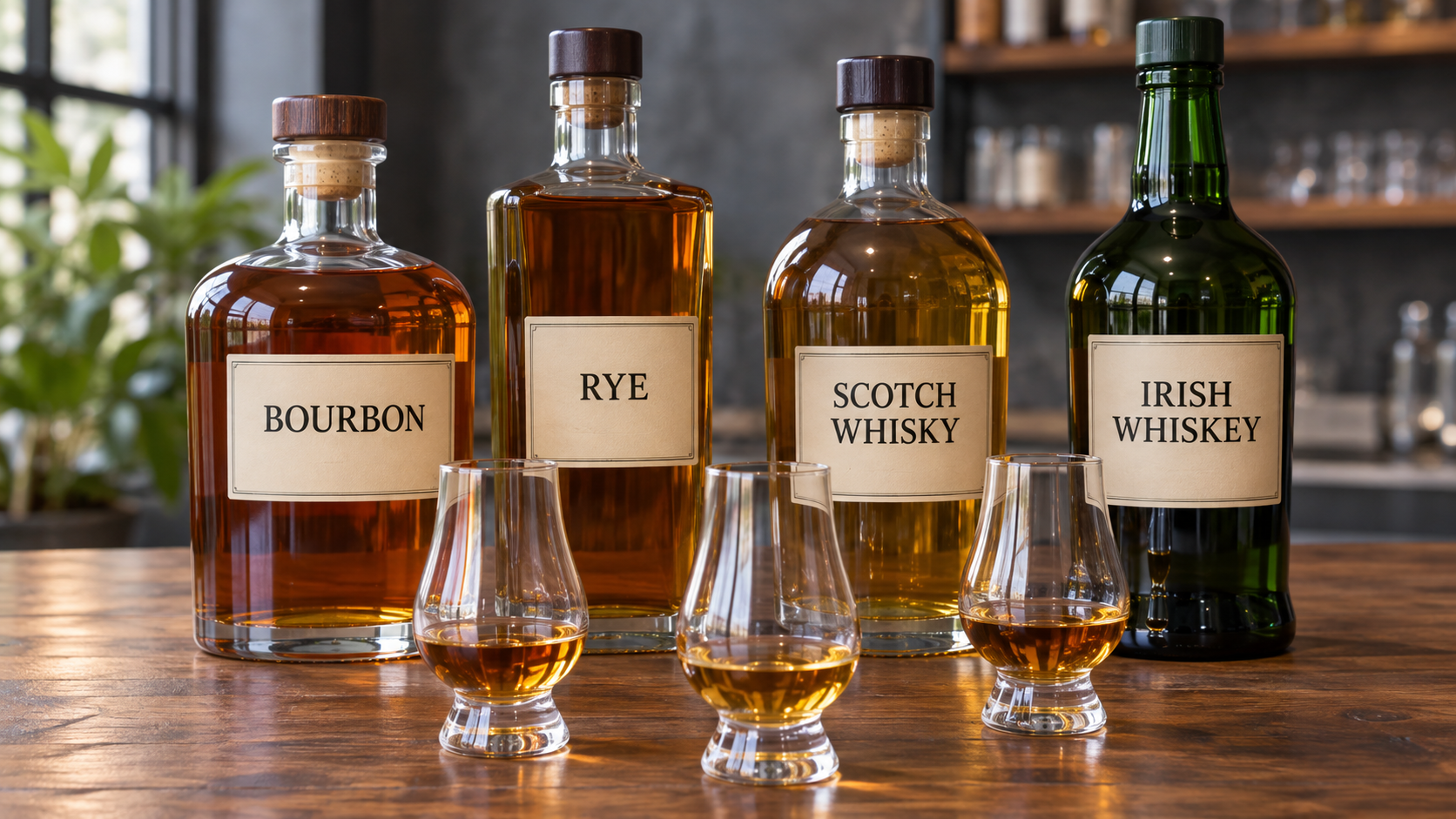
Bourbon is a perfectly good place to start, but you don’t have to start there. Think about flavors you already enjoy in food and drinks: caramel, vanilla, fruit, baking spice, roasted grain, or smoke. Whiskey styles can point you in a promising direction, although there’s enough variety within each one that a single bottle won’t tell you the whole story.
Bourbon and Tennessee whiskey. If caramel, vanilla, brown sugar, and oak sound appealing, bourbon is worth exploring. Some bottles lean sweeter and fruitier, while others put more emphasis on spice or dry oak. Tennessee whiskey can offer familiar flavors in that same general neighborhood; Jack Daniel’s, for example, describes caramel, vanilla, and wood in its Old No. 7. Compare individual bottles instead of expecting either label to tell you exactly how the whiskey will taste.
Rye whiskey. If you enjoy baking spices or pepper, take a look at rye. You can also find plenty of fruit and sweetness, so don’t assume every rye is going to be aggressively spicy. Read the description of the particular bottle and consider whether those flavors sound good neat, over ice, or in your favorite cocktail.
Irish whiskey. Irish whiskey gives you room to explore fruit, honeyed flavors, and different textures. Some bottles offer a lighter introduction, while others have considerably more richness and spice. Redbreast 12 is one example of a fuller-flavored Irish whiskey with fruit, spice, and toasted notes. There’s plenty to investigate beyond the word “smooth.”
Scotch. Scotch covers a huge range, including fruity, honeyed, malty, coastal, and smoky flavors. If smoke appeals to you, a peated Scotch might be worth sampling. If it doesn’t, look for an unpeated option. Please don’t let one bottle that tastes like a campfire convince you the entire country makes whiskey you hate.
American single malt. This is another direction to consider when exploring American whiskey. It’s made from 100% malted barley and distilled at a single U.S. distillery, giving you a different grain starting point from bourbon or rye. Look at the individual producer’s description and tasting notes to decide what interests you. The category name alone won’t tell you whether a particular bottle suits your palate.
Check the Proof Before You Buy
Once a bottle catches your attention, check its alcohol content. On U.S. labels, proof is twice the alcohol percentage, so a whiskey at 90 proof contains 45% alcohol by volume. That number gives you useful context when comparing bottles and reading reviews.
If you’re new to drinking spirits neat, I’d generally look around 80–100 proof as a starting point, then adjust from there as you figure out what you enjoy. Higher-proof whiskey can be enjoyable with water, and lower proof doesn’t guarantee that a bottle will taste gentle to you. Give yourself room to find the intensity you prefer instead of buying the strongest option because somebody called it the best.
Look for Useful Details in Whiskey Reviews
A score can tell you how much a reviewer enjoyed a whiskey, but the explanation is what helps you decide whether to buy it. If someone gives a bottle a glowing review because it’s intensely smoky and heavily oaked, that’s useful information. Whether it sounds appealing depends on how you feel about smoke and oak. A high score won’t change those preferences.
Look for descriptions of sweetness, fruit, spice, smoke, texture, and finish. Notice whether the reviewer mentions alcohol intensity, adds water, or compares it with a bottle you’ve already tried. A comparison you understand is often more useful than a long list of tasting notes you can’t relate to.
That applies to us at Barrel Hunters, too. We can explain what we like about a whiskey, but you might enjoy something different. As you try more bottles, you’ll start recognizing which parts of a review matter to you—and when a reviewer’s enthusiasm is pointing toward a bottle you can comfortably skip.
Try a Few Pours Before Buying More Bottles
Once you’ve found a style that interests you, a small comparison can help more than another hour of scrolling through recommendations. Try two bourbons with different flavor descriptions, for example, or compare a bourbon with a rye. Keep the pours small and, when practical, choose bottles with similar proofs so a large difference in alcohol strength doesn’t dominate the comparison.
You can also ask a friend to pour two or three whiskeys into labeled glasses without telling you which is which. Write down what you smell, what you taste, what lingers afterward, and which one you’d want again. Then reveal the bottles. Removing the labels can help reduce the influence of reputation and price while you decide what you enjoy.
Treat that result as something you learned about your preferences that day. You can revisit the bottles later or try them with a little water. If you’d like more help describing what’s in your glass, our beginner’s guide to tasting whiskey walks through the nose, palate, mouthfeel, and finish.
Use What You Learn to Choose Your Next Bottle
After trying a whiskey, get specific about what worked for you. Maybe you liked the caramel and fruit but found the oak too dry. Perhaps you enjoyed the flavors but wanted less alcohol intensity. Or maybe that smoky Scotch was the most interesting thing you tried. Even a couple of simple observations give you a better starting point for your next purchase.
Those details also make it easier to ask for help at a liquor store. “I liked the vanilla and fruit in this bottle, but I’d prefer less oak and a lower proof” gives someone much more to work with than “What’s your best whiskey?” Add your budget and how you plan to drink it, and you’ve given them a useful description of what you’re looking for.
You’ll probably make a few purchases that don’t quite work for you, and your preferences may change as you explore. Keep paying attention, stay curious, and give yourself permission to enjoy the bottle you enjoy. If an affordable whiskey keeps making you happy, you’ve already made a good purchase. You don’t need a rarer one to validate it.